Manufacturing is one of the most targeted sectors for ransomware and cybercrime. A single cyber incident can halt production, disrupt supply chains, and cause significant financial losses. At the same time, Canadian manufacturers face growing data protection, cybersecurity, and contractual compliance requirements.
This guide highlights the key technology security and compliance measures that small and mid-sized manufacturing businesses should implement to maintain a secure, reliable, and efficient IT environment.
Cyber incidents can be extremely costly. Small and mid-sized businesses often experience losses ranging from $250,000 to $500,000 per incident, while the average data breach across Canadian organizations exceeds $6 million CAD according to IBM research. These costs can include downtime, lost productivity, system recovery, incident response, legal fees, and potential ransom payments. For manufacturers, the financial impact is often even greater because production downtime directly affects revenue and customer commitments.
Why SME Manufacturing Companies Are Targeted
Manufacturers are attractive targets because they often possess valuable intellectual property and sensitive operational data. CAD files, proprietary product designs, manufacturing processes, customer information, and supplier data all have significant value to cybercriminals.
Common threats include:
- Ransomware targeting production systems
- Phishing attacks against finance and operations staff
- Compromised supplier or vendor accounts
- Unpatched legacy equipment
- Insecure remote access
- Intellectual property theft
Contrary to popular belief, SMEs are frequently targeted because they often have fewer cybersecurity resources than larger organizations. Investments are commonly directed toward immediate operational needs or growth initiatives, while cybersecurity improvements are delayed. Unfortunately, many organizations only address security gaps after a costly incident occurs.
Why IT Security & Compliance Matters Strategically
Beyond protecting systems and minimizing downtime, strong cybersecurity and compliance practices provide important business advantages.
Cyber Insurance Eligibility
Cyber insurance has become an essential business safeguard. However, insurers now require organizations to demonstrate specific security controls before issuing or renewing policies. Weak security measures can lead to higher premiums, denied claims, or refusal of coverage altogether.
Today, protecting digital assets is just as important as protecting physical assets. Organizations that maintain strong cybersecurity practices are typically in a better position to secure cost-effective insurance coverage.
Winning and Retaining Business
Cybersecurity has become a key component of vendor qualification processes. Customers increasingly evaluate the security practices of their suppliers before awarding contracts.
Manufacturers that can demonstrate strong cybersecurity policies, compliance controls, and risk management practices are often viewed as lower-risk partners. For many SMEs, a strong security posture can become a competitive advantage that helps win new business and retain existing clients.
IT vs. OT
Before discussing security controls, it’s important to distinguish between Information Technology (IT) and Operational Technology (OT).
IT (Information Technology) includes the systems used to store, process, and manage business information and communications. Examples include Microsoft 365, workstations, servers, networking equipment, and business applications.
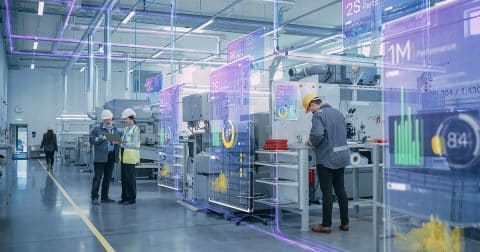
OT (Operational Technology) includes systems that monitor and control physical equipment and manufacturing processes. Examples include industrial controllers, automation systems, sensors, scanners, and production equipment.
Simply put, IT runs the business and OT runs the machines.
Core Technology Security Controls Every Manufacturer Should Have
1. Network Security
Every manufacturer should have a commercial-grade firewall with advanced threat protection to inspect and filter incoming internet traffic. Firewall firmware and security policies should be reviewed and updated regularly to protect against emerging threats.
Network segmentation between IT and OT environments is equally important. Without proper separation, a cybersecurity incident in the business network can potentially spread into production systems, leading to downtime and operational disruption.
Segmentation allows organizations to apply appropriate access controls, monitoring, and security policies to each environment while reducing overall risk.
2. Endpoint Protection
Endpoint Detection and Response (EDR) software should be installed on all workstations, laptops, and mobile devices. EDR provides advanced threat detection and response capabilities beyond traditional antivirus software.
Devices should also be regularly updated with the latest operating system, application, and firmware patches to reduce security vulnerabilities.
In addition, organizations should enable device encryption to ensure that sensitive data remains protected if a device is lost, stolen, or accessed without authorization.
3. Identity & Access Management
Users should only have access to the systems and information necessary to perform their jobs. Role-based access controls help prevent unauthorized access to sensitive data and reduce overall risk.
Multi-Factor Authentication (MFA) should also be enforced wherever possible. MFA requires users to provide an additional form of verification beyond a password, making stolen credentials significantly less useful to attackers.
MFA should be enabled for:
- Microsoft 365
- Cloud applications
- VPN and remote access systems
- Administrative accounts
- Business-critical software and platforms
As password attacks continue to increase, MFA remains one of the most effective security controls available.
4. Backup & Disaster Recovery
Backup and disaster recovery solutions are essential for minimizing downtime and data loss following a cyber incident, hardware failure, or human error.
Business-critical data should be backed up automatically and regularly. For most manufacturers, multiple backups per day help minimize potential data loss. Backup solutions should include immutable storage, preventing backup files from being altered or deleted by ransomware or unauthorized users.
Organizations should also maintain redundant copies of critical data, ideally with one copy stored locally and another stored securely offsite or in the cloud.
Regular backup testing is equally important. A backup is only valuable if it can be successfully restored when needed.
Beyond backups, manufacturers should have a disaster recovery plan that outlines how critical systems will be restored during a major outage. Given the high cost of production downtime, the ability to recover quickly can significantly reduce financial losses.
An incident response plan should also be established. Clearly documented procedures help employees respond quickly and effectively during a cybersecurity event, limiting confusion and reducing overall impact.
5. Security Monitoring
Security monitoring helps organizations identify and respond to threats before they cause significant damage.
Threat detection tools continuously monitor systems for suspicious activity, unusual behavior, and potential attacks. When threats are detected, established processes can be used to contain, investigate, and remediate issues quickly while minimizing operational disruption.
6. Employee Security Awareness Training
Human error remains the leading cause of cybersecurity incidents.
Employees should receive regular training on topics such as phishing attacks, social engineering, password security, and safe technology usage. Ongoing education, combined with simulated phishing campaigns and practical exercises, helps employees recognize and avoid common threats before they impact the organization.
For many SMEs, security awareness training is one of the most cost-effective cybersecurity investments available.
Making IT Easy
Manufacturers that invest in proactive cybersecurity and compliance are better positioned to protect intellectual property, reduce downtime, qualify for cyber insurance, and meet customer requirements. Strong security practices also help organizations strengthen supplier relationships and create new business opportunities.
Partnering with an experienced Managed IT Services provider can simplify the process. By outsourcing the management of critical technology systems, manufacturers gain access to specialized expertise, proactive maintenance, strategic guidance, and improved security. The result is a more resilient organization that can focus on manufacturing, serving customers, and growing the business instead of managing IT challenges.